Scan POS at the Workshop Counter: Faster Parts Billing Without Losing Accuracy
Most conversations about POS and scan-based billing focus on retail counters. But a busy workshop's parts counter faces the same pressure — a technician needs a part fast, the advisor needs to bill it correctly against the right job card, and the customer is waiting either way. When that process depends on manually looking up part numbers and typing prices into an invoice, delays and errors both increase, especially during peak hours with multiple vehicles in the bay at once.
A scan-based POS approach, applied to a workshop's parts inventory, solves the same problem here that it solves in retail: speed without sacrificing accuracy.
Why Workshop Parts Counters Need This More Than People Assume
Every Part Ties to a Specific Job Unlike a retail sale, a workshop parts transaction isn't standalone — it needs to link to the correct job card and vehicle. A scan-based process that pulls the part directly into the active job card, rather than requiring separate entry, keeps job costing accurate from the start.
High Part Variety, High Error Risk A workshop stocking parts across multiple brands or vehicle variants has far more room for mix-ups than a retail shop with static SKUs. Scanning a part directly, instead of manually selecting from a long list, reduces the chance of billing the wrong variant.
Turnaround Time Affects Customer Perception Customers judge a workshop partly on how efficiently it operates. A parts counter that scans and bills quickly, rather than making a customer wait while someone manually checks a part number, contributes directly to that impression.
What a Workshop-Ready Scan POS Setup Looks Like
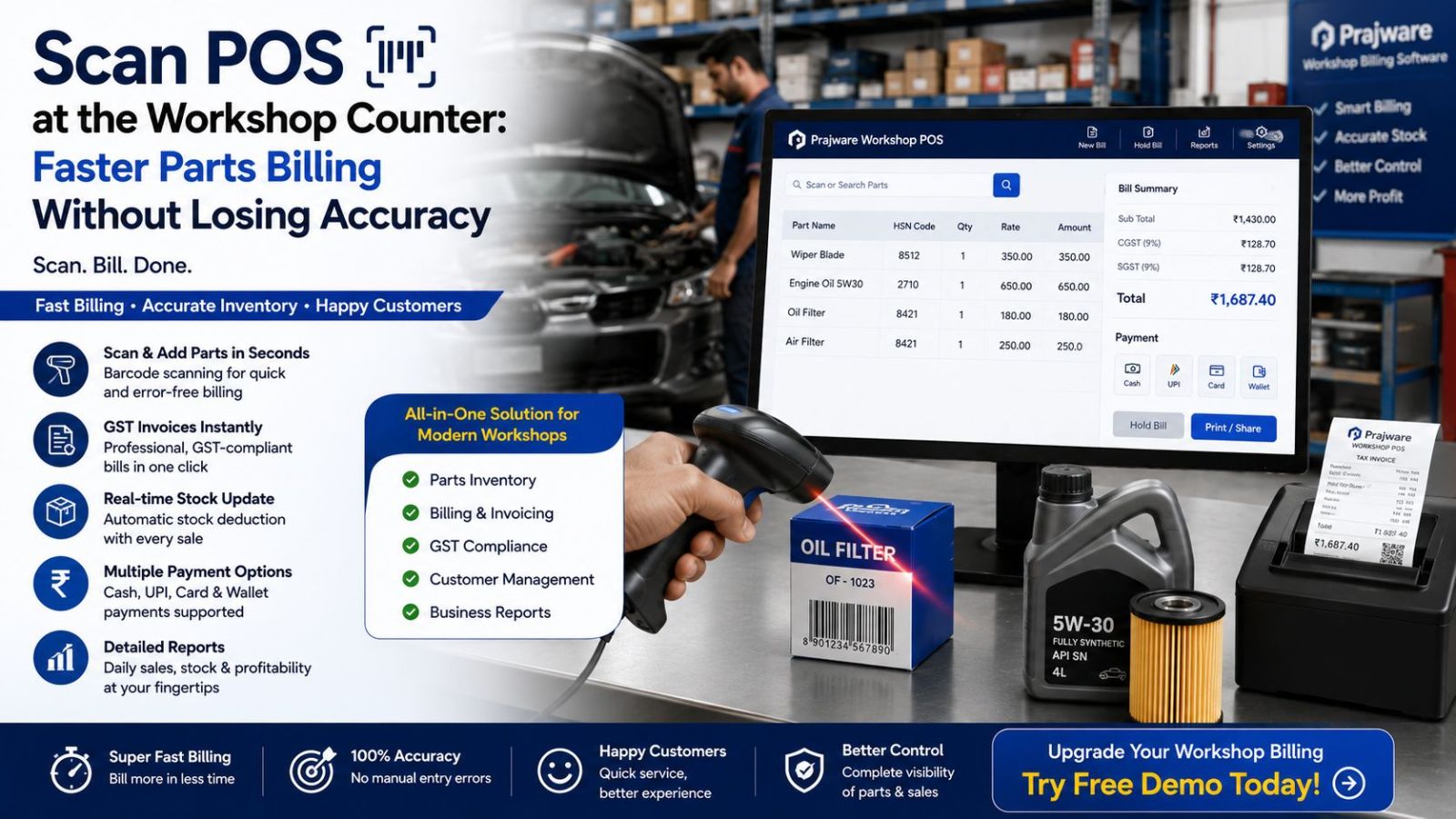
Barcode-Ready Parts Catalog With 2000+ pre-loaded spare parts already mapped to correct HSN codes, a scan pulls in the part name, price, and applicable GST rate immediately — no manual lookup, no risk of an incorrect tax code.
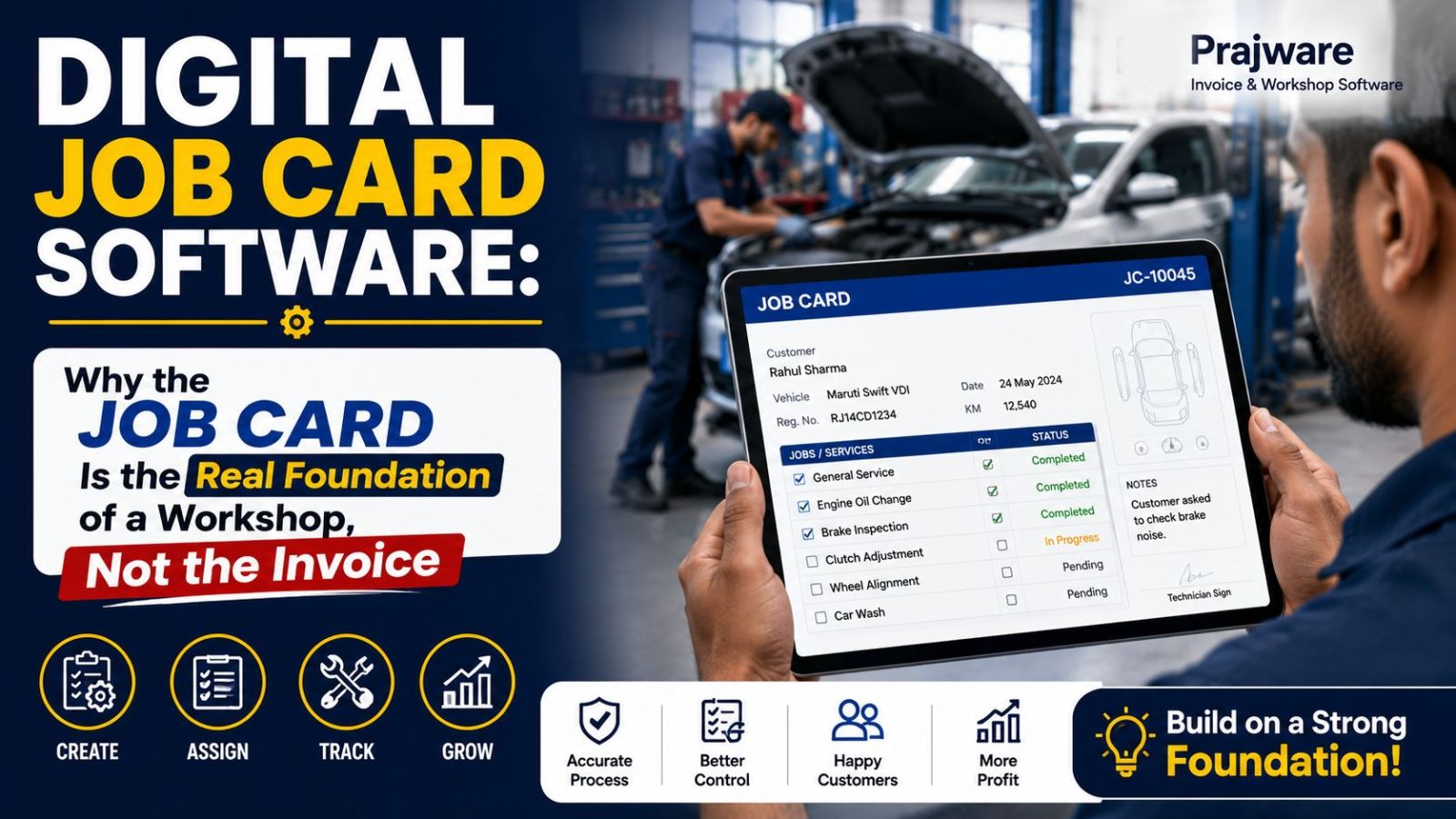
Direct Link to the Active Job Card Scanned parts should attach to the vehicle's job card in real time, so labor, parts, and service notes stay in one place rather than needing to be reconciled at invoicing.
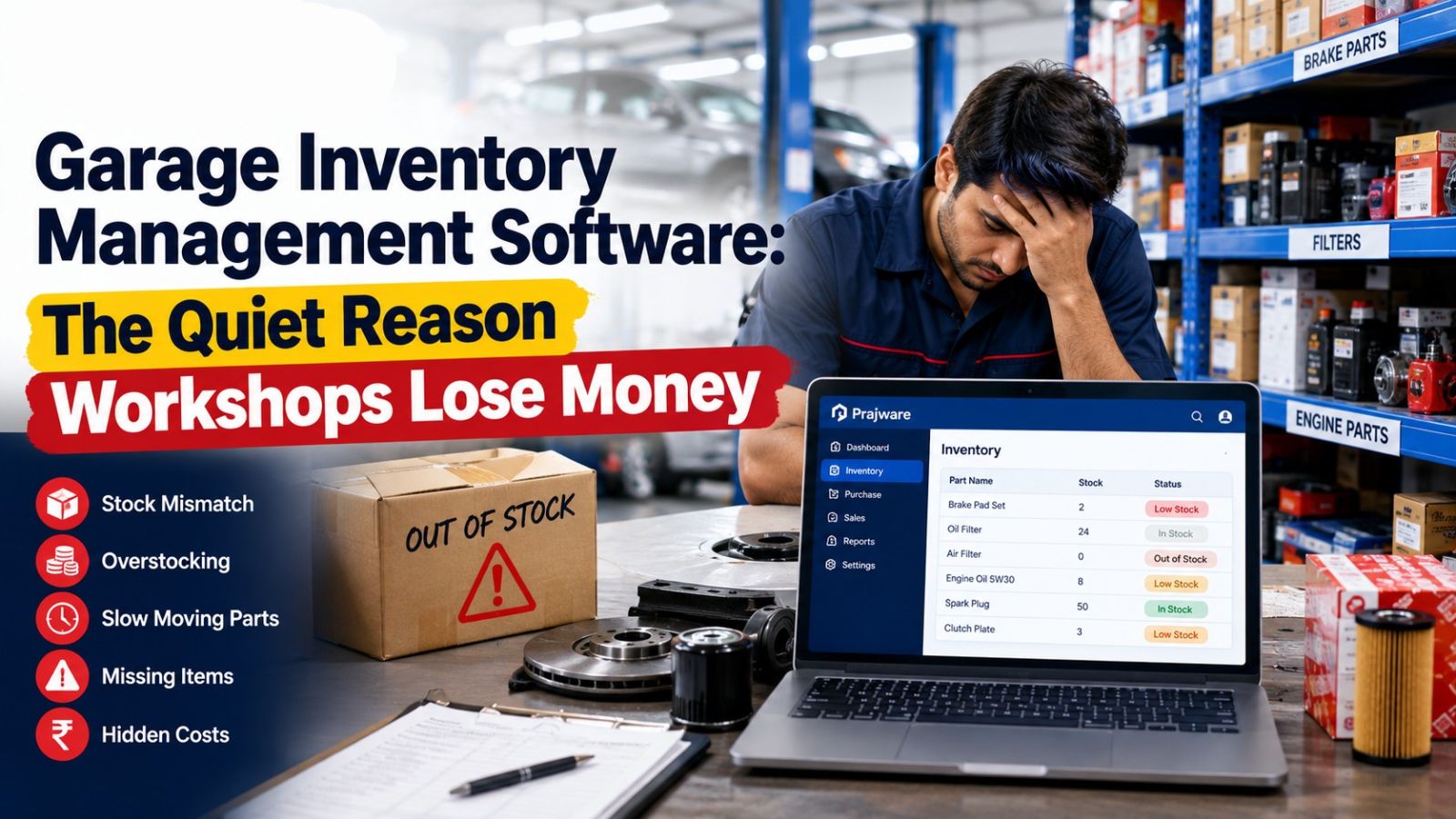
Automatic Inventory Deduction The moment a part is scanned and billed, stock should reduce automatically. A live parts ledger with reorder level alerts means the counter always reflects real stock, preventing a technician from being told a part is available when it isn't.
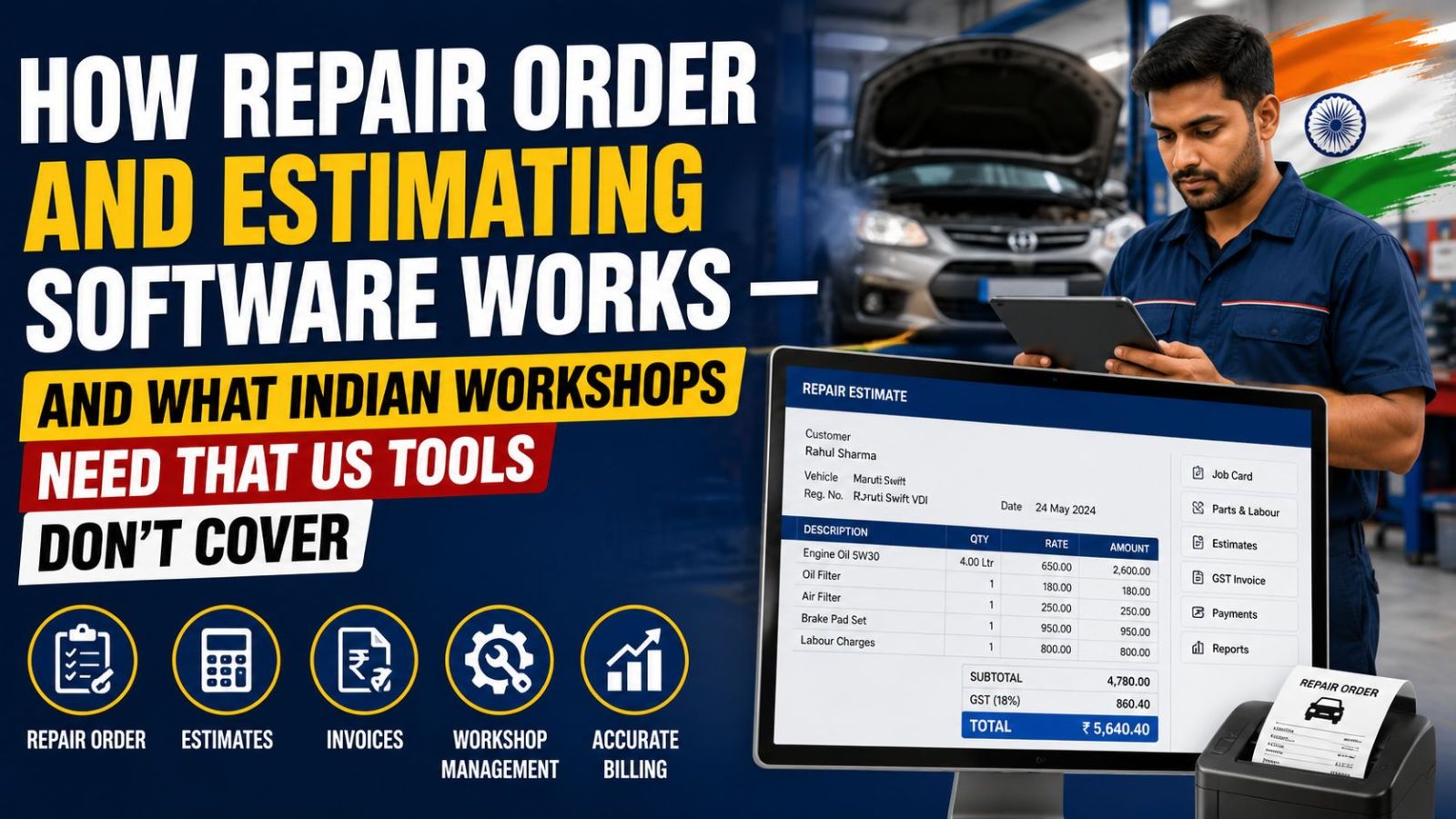
Instant GST-Compliant Invoicing Once parts and labor are scanned or entered against the job card, generating the GST-compliant invoice should take a single click — converting the job card directly into a final bill.
Fast Digital Delivery to the Customer Sending the final invoice via WhatsApp or SMS, with UPI payment options built in, closes the transaction without the customer needing to wait at a separate billing window.
The Combined Effect: Faster Bays, Cleaner Books
When scanning replaces manual part lookup at the counter, workshops typically see two compounding benefits: vehicles move through the bay faster because billing isn't a bottleneck, and inventory records stay accurate because every part movement is captured automatically rather than reconciled later by hand.
How Prajware Workshop Brings Scan-Style Speed to the Parts Counter
Prajware Workshop connects a pre-loaded, HSN-mapped parts catalog with digital job cards, real-time inventory deduction, and one-click GST invoicing — so parts billing at the counter moves at the same speed as a modern retail checkout, without losing the job-card-level accuracy a workshop needs. Add WhatsApp and SMS invoice delivery with built-in UPI support, and the entire flow from part to payment stays inside one system.
Want your parts counter to move faster without sacrificing accuracy? Book a free demo of Prajware Workshop and see scan-to-invoice billing built for a workshop floor.